Antenna Theory · Why Antennas Radiate
#01 An intuitive path from time-varying electric and magnetic fields to dipole radiation, the three-dimensional pattern, and the monopole image idea
Build a three-dimensional field picture of how circuit energy leaves an antenna, using the dipole and monopole as the basic geometries.
Question
Explain intuitively why a dipole radiates using time-varying E and H fields; relate a two-dimensional pattern slice to the three-dimensional torus and interpret a monopole above ground through the image idea.
Written solution and narration transcript(shows the full solution)
Below are all the lines written in the notebook together with the full narration transcript.
1. Build the circuit-to-space picture
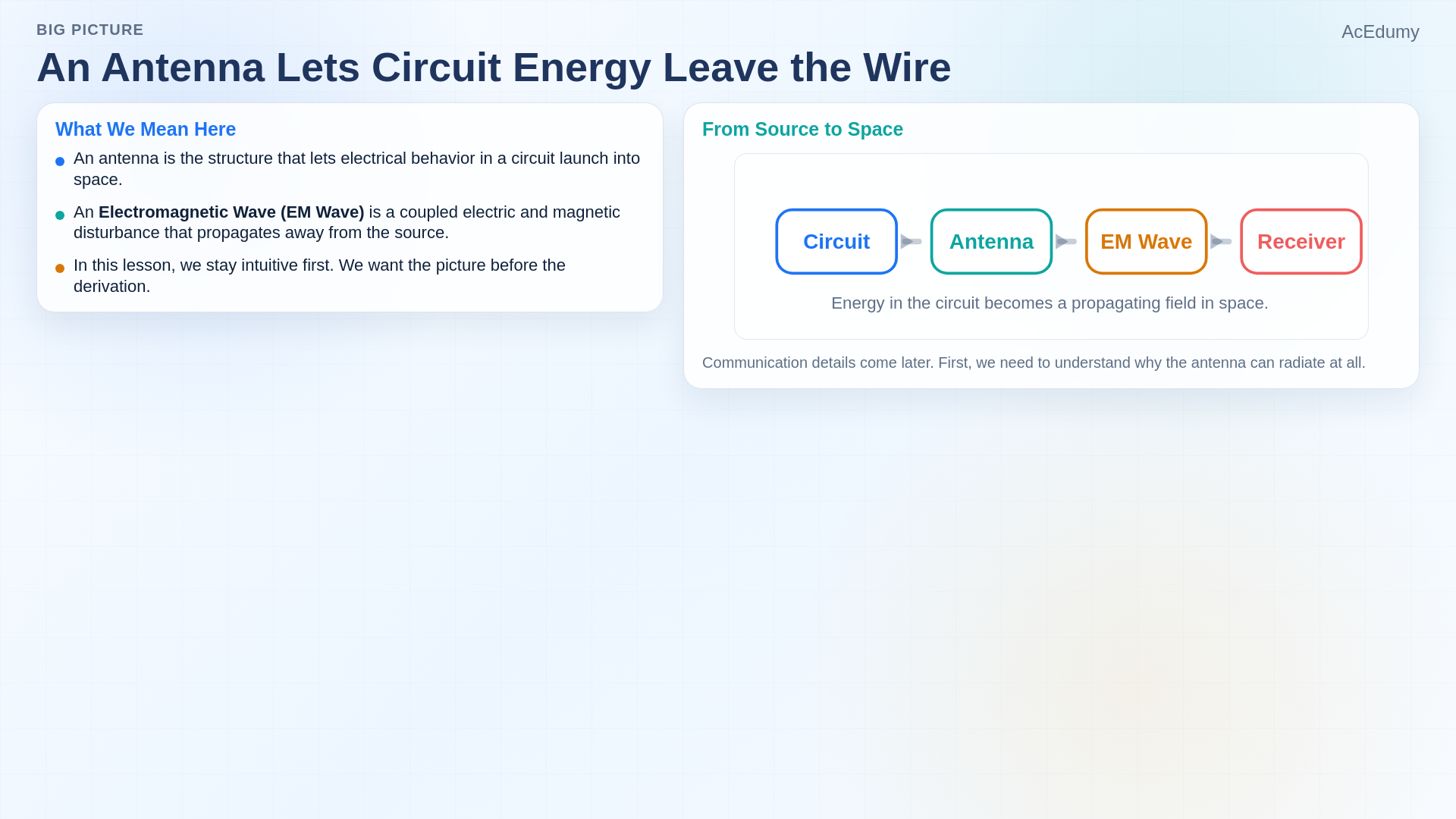
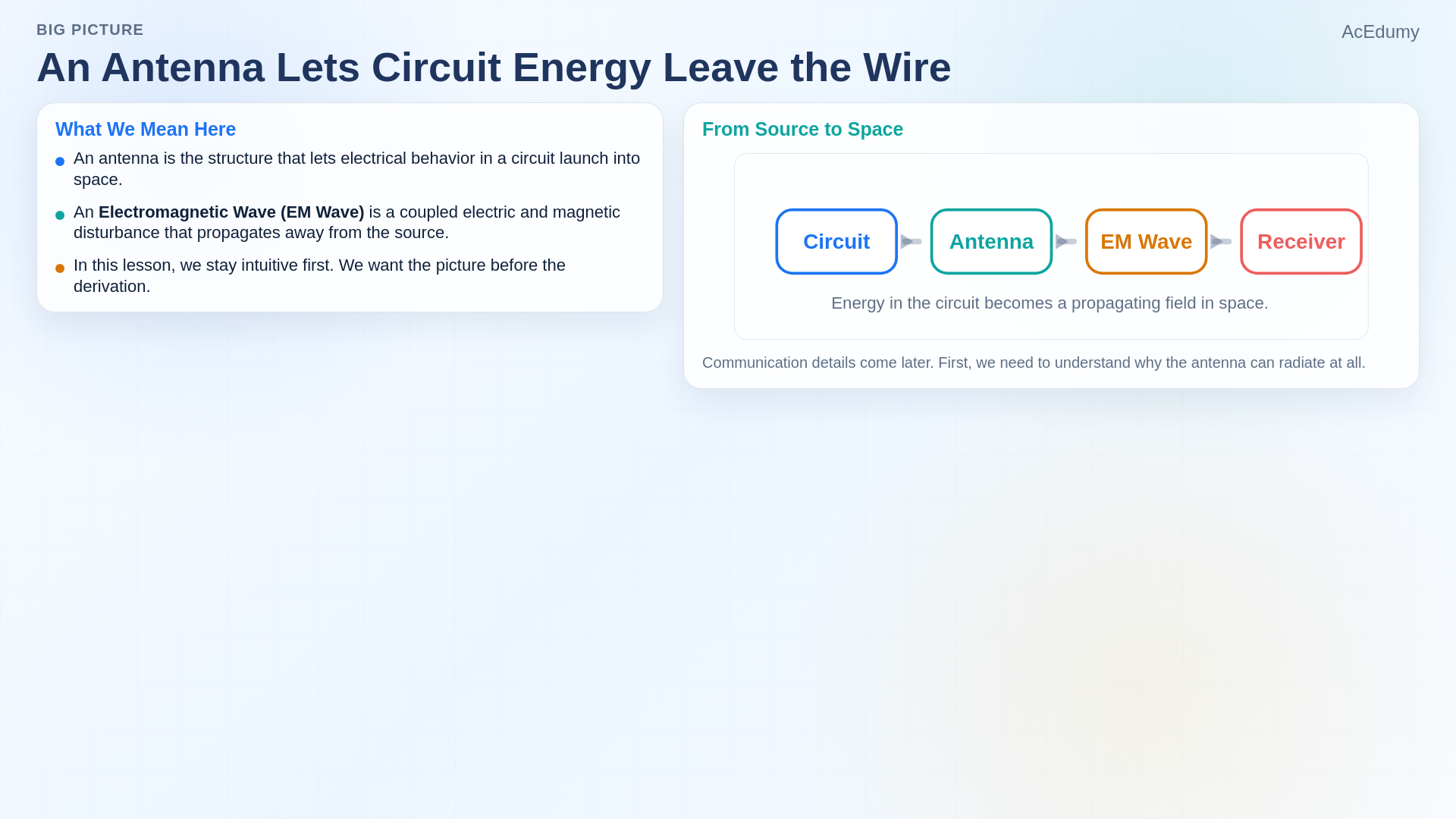
Time-varying fields can detach from the near region and carry energy through space; dipoles and monopoles are the basic geometries. An antenna is the structure that lets electrical energy in a circuit leave the wire and travel through space.In this lesson, an electromagnetic wave, or EM wave, means a coupled electric and magnetic disturbance that moves away from the source.We will stay intuitive first.The goal is not a full Maxwell derivation yet.The goal is to build a picture that makes the later formulas feel motivated instead of mysterious.Once that picture is clear, the rest of antenna theory becomes much easier to trust.Narration transcript
An antenna is the structure that lets electrical energy in a circuit leave the wire and travel through space. In this lesson, an electromagnetic wave, or E M wave, means a coupled electric and magnetic disturbance that moves away from the source. We will stay intuitive first. The goal is not a full Maxwell derivation yet. The goal is to build a picture that makes the later formulas feel motivated instead of mysterious. Once that picture is clear, the rest of antenna theory becomes much easier to trust.
2. Follow the changing E and H fields of a dipole
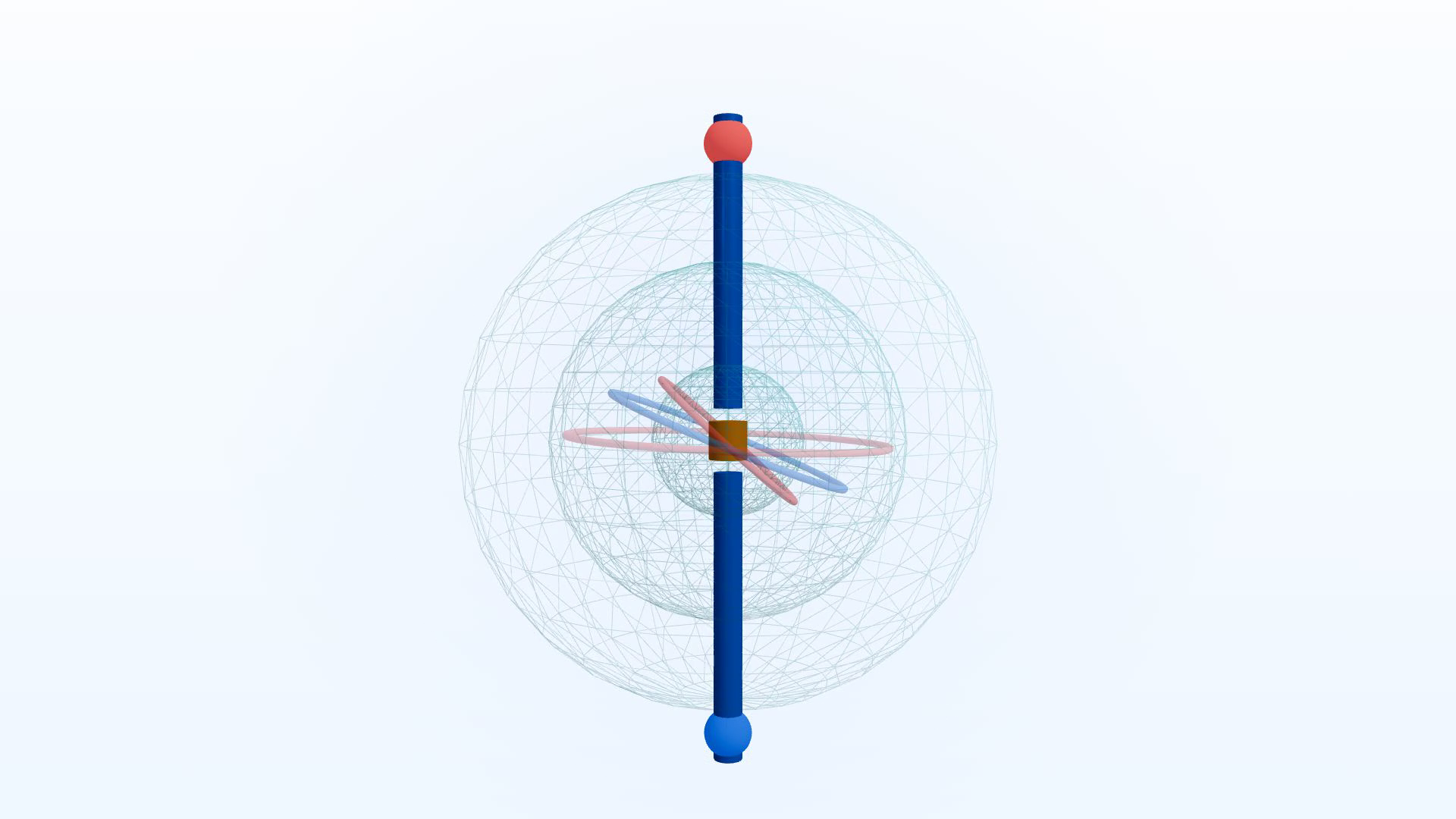
Time-varying fields can detach from the near region and carry energy through space; dipoles and monopoles are the basic geometries. Start with a dipole fed by an alternating current, or AC, source.As charge oscillates back and forth, charge separation develops across the two arms.That creates a changing electric field, or E field, between the conductor regions.Because the electric field changes with time, a magnetic field, or H field, appears around the current path.Then the changing magnetic field supports a changing electric field again.This time-varying loop is the core intuition behind radiation.The message is simple: if the fields keep changing in the right way, energy no longer stays trapped near the wire.It can propagate away.Narration transcript
Start with a dipole fed by an alternating current, or A C, source. As charge oscillates back and forth, charge separation develops across the two arms. That creates a changing electric field, or E field, between the conductor regions. Because the electric field changes with time, a magnetic field, or H field, appears around the current path. Then the changing magnetic field supports a changing electric field again. This time-varying loop is the core intuition behind radiation. The message is simple: if the fields keep changing in the right way, energy no longer stays trapped near the wire. It can propagate away.
3. Move from a flat slice to the torus pattern
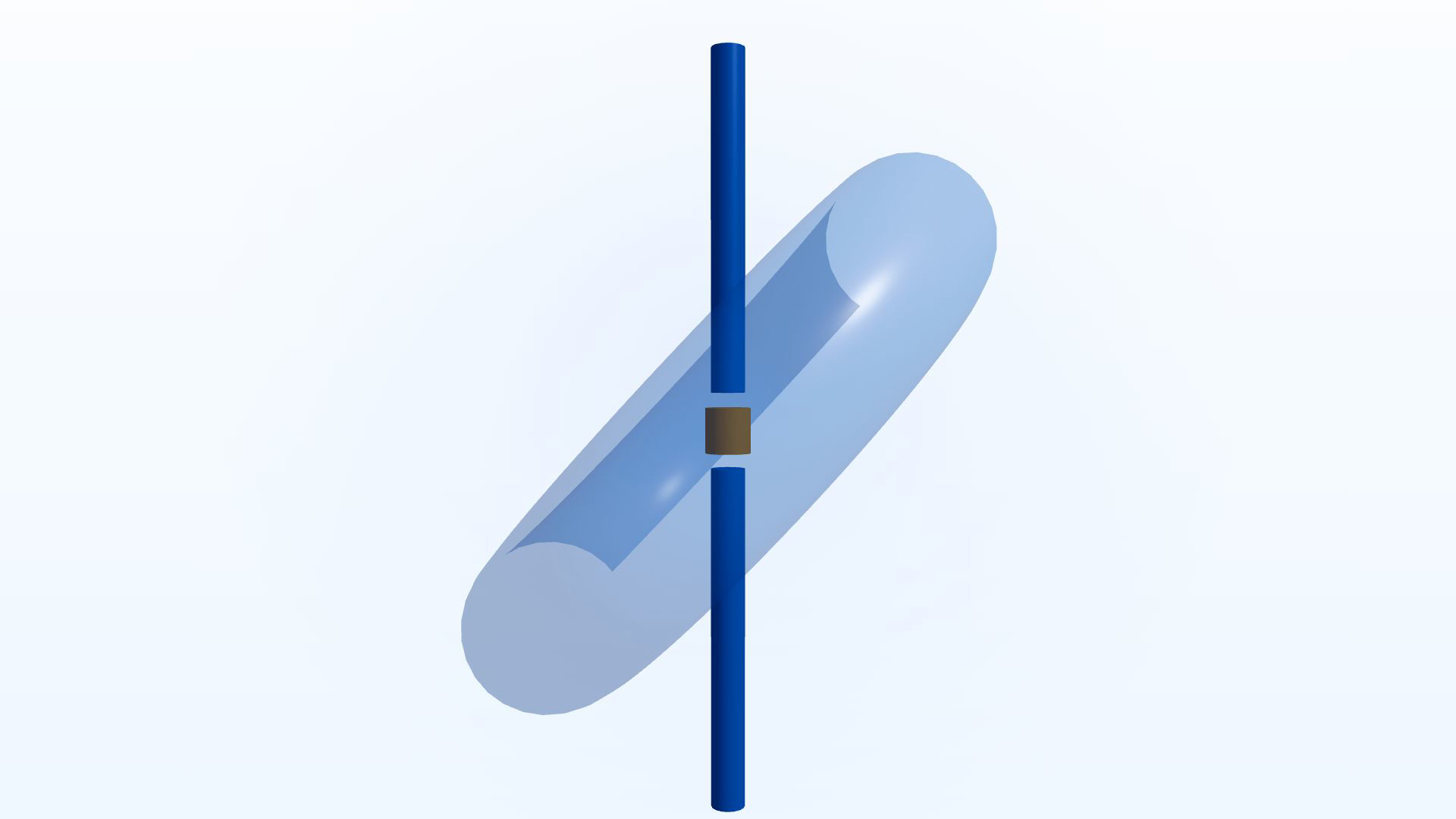
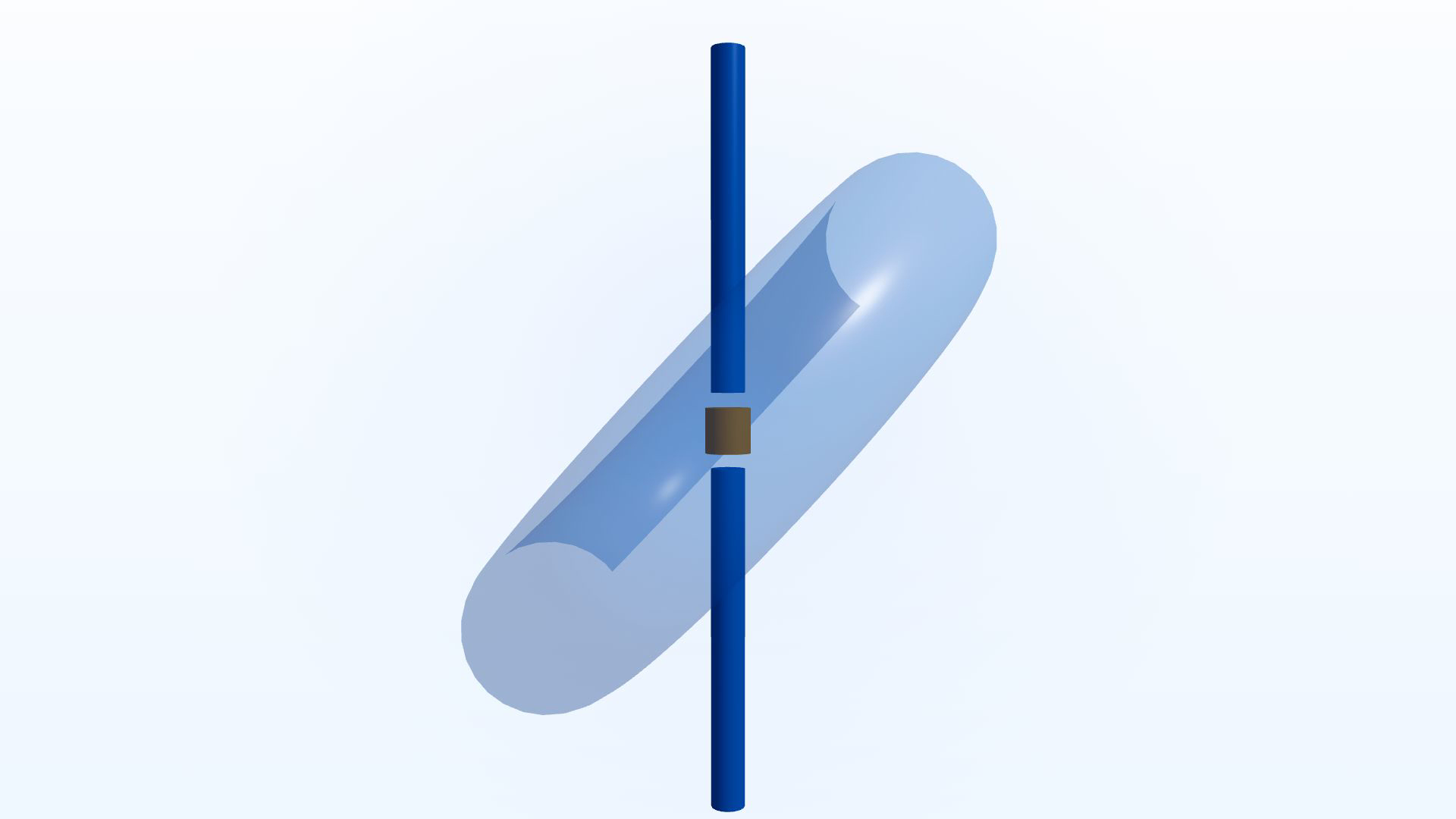
Time-varying fields can detach from the near region and carry energy through space; dipoles and monopoles are the basic geometries. Many textbooks draw an apple-like or lobe-like picture for a dipole.That picture is helpful, but it is only a two-dimensional slice through the full three-dimensional radiation region.In full space, the strongest radiation wraps around the dipole and forms a torus-like or donut-like shape.At the same time, radiation is weakest along the dipole axis itself.So the flat slice is not wrong, but it is incomplete.This is exactly why light three-dimensional animation is useful here: it resolves a spatial misunderstanding that static sketches often leave behind.Narration transcript
Many textbooks draw an apple-like or lobe-like picture for a dipole. That picture is helpful, but it is only a two dimensional slice through the full three dimensional radiation region. In full space, the strongest radiation wraps around the dipole and forms a torus-like or donut-like shape. At the same time, radiation is weakest along the dipole axis itself. So the flat slice is not wrong, but it is incomplete. This is exactly why light three dimensional animation is useful here: it resolves a spatial misunderstanding that static sketches often leave behind.
4. Interpret the monopole with a ground-plane image
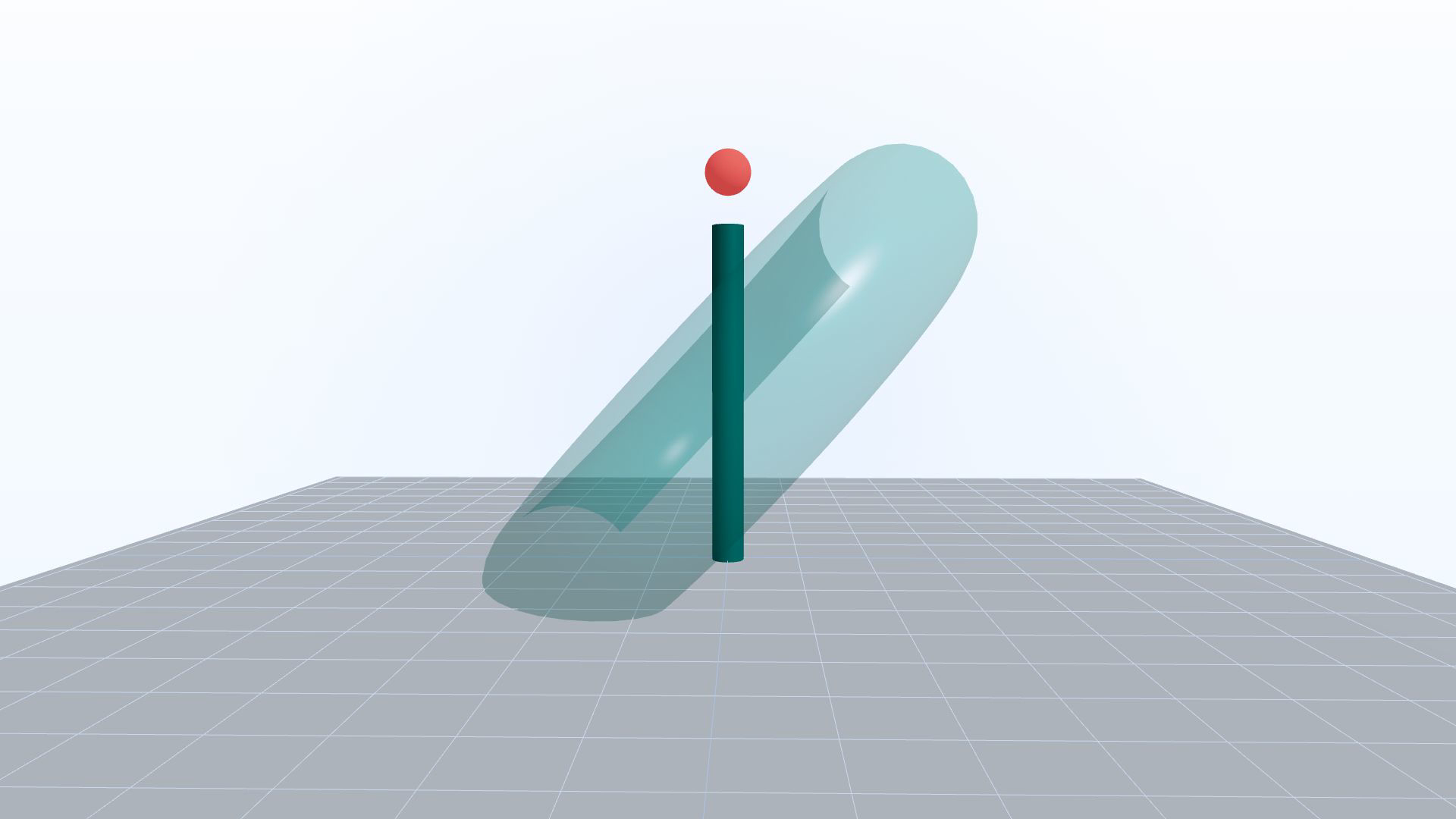
Time-varying fields can detach from the near region and carry energy through space; dipoles and monopoles are the basic geometries. Now place a conducting ground plane under half of the dipole.That gives the key intuition for a monopole antenna.The missing lower half can be treated as an image in the ground, so the visible vertical rod behaves like half of a dipole above a mirror.This is why a monopole can still radiate efficiently while using only one physical arm above the surface.For this lesson, the image idea is enough.We do not need the formal mathematics yet.We only need to see why the monopole picture is so closely related to the dipole picture.Narration transcript
Now place a conducting ground plane under half of the dipole. That gives the key intuition for a monopole antenna. The missing lower half can be treated as an image in the ground, so the visible vertical rod behaves like half of a dipole above a mirror. This is why a monopole can still radiate efficiently while using only one physical arm above the surface. For this lesson, the image idea is enough. We do not need the formal mathematics yet. We only need to see why the monopole picture is so closely related to the dipole picture.
5. Connect radiation to a wireless link
Time-varying fields can detach from the near region and carry energy through space; dipoles and monopoles are the basic geometries. This is also why antennas matter so much in communication systems.A circuit can generate information, but an antenna lets that time-varying electrical behavior launch into space and reach a distant receiver.Later, modulation explains how information rides on a higher frequency carrier.But before we talk about those communication details, we need this antenna picture.No changing fields means no radiation.No radiation means no wireless link.So this lesson is the foundation that connects field intuition to the practical idea of sending energy and information through space.Narration transcript
This is also why antennas matter so much in communication systems. A circuit can generate information, but an antenna lets that time-varying electrical behavior launch into space and reach a distant receiver. Later, modulation explains how information rides on a higher frequency carrier. But before we talk about those communication details, we need this antenna picture. No changing fields means no radiation. No radiation means no wireless link. So this lesson is the foundation that connects field intuition to the practical idea of sending energy and information through space.
6. Prepare for patterns, planes, gain, and directivity
Time-varying fields can detach from the near region and carry energy through space; dipoles and monopoles are the basic geometries. In the next lesson, we build on this intuition and examine radiation patterns more carefully using E plane, H plane, gain, and directivity.For now, remember three pictures: the dipole, the full three-dimensional torus-like radiation shape, and the monopole above ground.Narration transcript
In the next lesson, we build on this intuition and examine radiation patterns more carefully using E plane, H plane, gain, and directivity. For now, remember three pictures: the dipole, the full three dimensional torus-like radiation shape, and the monopole above ground.
Source video: Antenna Theory #01 Why Antennas Radiate (3:55)